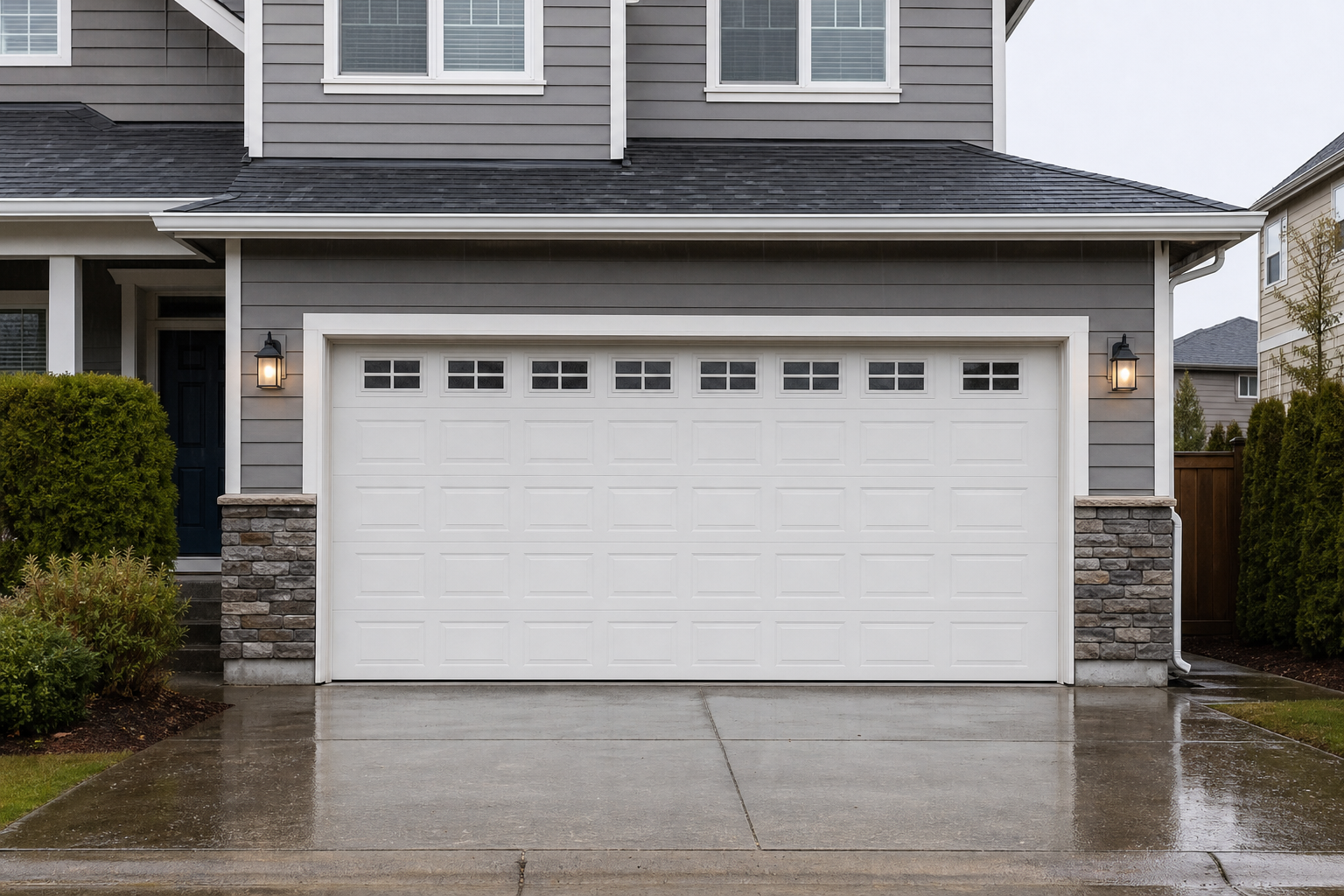
In Everett, WA, a garage door has to handle rain, wind, cold snaps, and salty air from the Sound. That makes weatherproofing a key part of every garage door installation, not an add-on. When the seal is right and the door is fitted well, your garage stays drier, quieter, and easier to heat.
For homeowners, the goal is simple: choose garage doors and materials that stand up to local conditions while improving curb appeal and daily use. A smart installation can help reduce drafts, block water at the threshold, and keep debris from blowing inside. It can also lower wear on openers, springs, and panels over time.
If you are planning a garage door installation in Everett, this guide breaks down the weatherproofing details that matter most in Washington. For more maintenance tips, see our blog.
Why Weatherproofing Matters in Washington
Western Washington weather can shift fast. A dry morning can turn into a wet afternoon, and that constant moisture is hard on garage doors. Even a strong residential service plan should account for gaps, drainage, and insulation.
Weatherproofing helps with:
- Keeping rainwater from blowing into the garage
- Reducing cold air leaks around the bottom and sides
- Limiting rust and moisture damage on hardware
- Improving comfort if the garage is used for storage, tools, or a workspace
- Supporting energy savings in attached homes
Common Problem Areas
Most weather issues show up in a few places: the bottom seal, side seals, top trim, and the transition where the slab meets the driveway. If the floor is uneven or the door is not aligned correctly, even a new garage door can leak air and water.
Weatherproofing Solutions to Ask For During Installation
Good garage door installation is about more than hanging the door. The right setup should include materials and details that fit Everett’s climate.
1. Bottom Seal and Threshold Seal
A durable rubber bottom seal helps block wind-driven rain and pests. On some garages, a threshold seal on the concrete adds another layer of defense. This is especially useful when the driveway slopes toward the opening.
2. Side and Top Weatherstripping
Vinyl or bulb-style weatherstripping creates a tighter fit along the jambs and header. It should compress evenly without binding the door. If the seal looks crushed or leaves light visible around the edges, it may need adjustment.
3. Insulated Garage Doors
Insulated garage doors can help stabilize temperature and reduce condensation. That matters for attached garages, finished rooms above the garage, and homeowners who want a better year-round feel. Insulation also supports quieter operation.
4. Proper Track and Panel Alignment
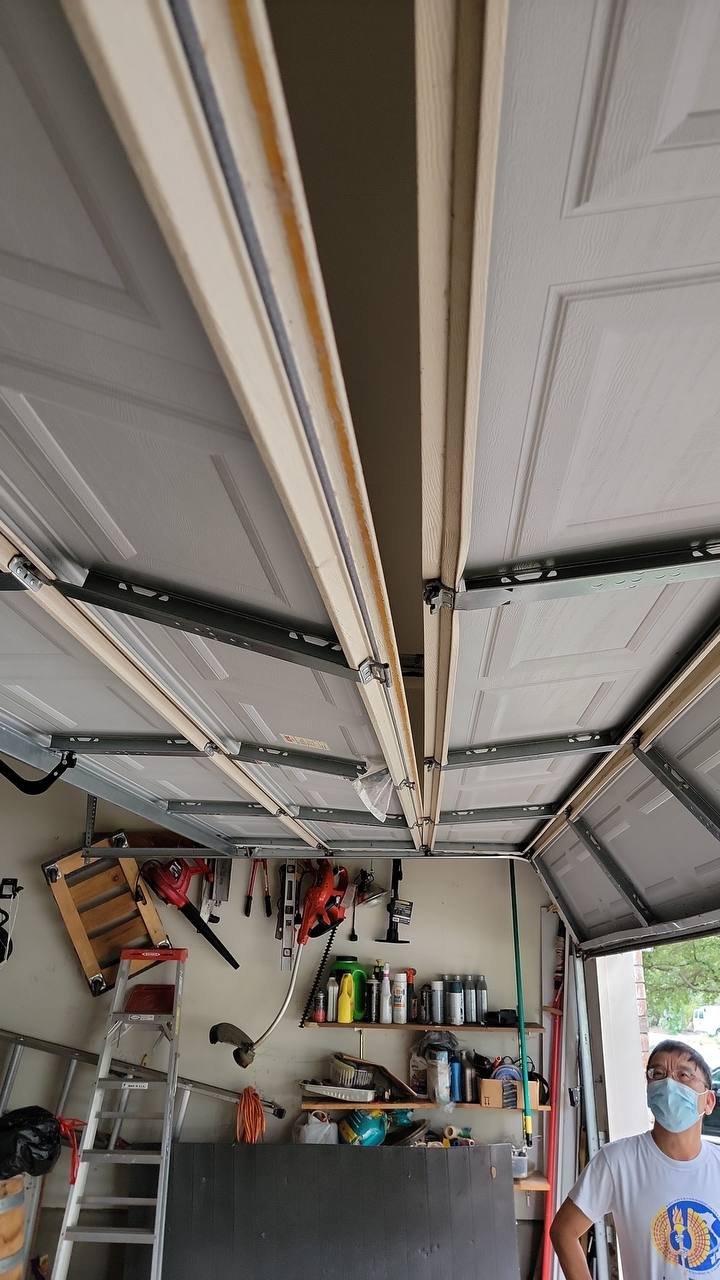
Even high-quality garage doors can leak if the tracks are out of alignment or the panels sit unevenly. During installation, the door should close flush and move smoothly across the opening. Small gaps become bigger problems in wet weather.
5. Rust-Resistant Hardware
Moisture can shorten the life of hinges, rollers, and fasteners. Ask about galvanized or corrosion-resistant parts, especially if your garage is exposed to damp conditions for much of the year.
If you are comparing options or scheduling a new install, visit our services page to see how garage door installation is handled from start to finish.
What Everett Homeowners Should Consider Before Installation
Every garage is a little different. Before starting a garage door installation, take a close look at the structure and how water moves around it.
- Driveway slope: Water can pool at the opening if the grade is wrong.
- Concrete condition: Cracks or uneven spots can break the seal.
- Exposure: Wind, tree cover, and north-facing garages often need extra attention.
- Use case: Storage and workspace garages may need better insulation than a simple parking space.
- Door material: Steel, wood, and composite each have different weather behavior.
If you are unsure what your garage needs, a local inspection is the best first step. You can contact us to ask about fit, seals, and installation timing.
How Long Does It Take?
Most standard garage door installation projects can be completed in a day, though weatherproofing upgrades, repairs to the opening, or custom sizing may add time. A clear estimate should explain what is included before the work begins.
Maintenance Tips for Long-Lasting Weather Protection
Once the door is installed, a little upkeep goes a long way. Check the seal after heavy rain, look for daylight around the edges, and clean debris from the threshold. If the door sticks, scrapes, or leaves a gap, it may need adjustment.
- Inspect seals twice a year
- Keep the track and threshold clean
- Watch for rust on brackets and rollers
- Replace cracked or flattened weatherstripping early
- Test the door balance if it starts closing unevenly
Home improvement projects like garage door installation work best when they are planned for local conditions. In Everett, that means choosing garage doors that can handle moisture, wind, and changing temperatures without constant fixes.
FAQ: Garage Door Installation Weatherproofing in Everett
Do Everett homes need extra weatherproofing for garage door installation?
Yes. Everett’s rain and wind make bottom seals, side weatherstripping, and proper alignment especially important during garage door installation.
What is the best seal for a garage door in WA?
Most homes do well with a heavy-duty bottom seal plus side and top weatherstripping. If the slab is uneven, a threshold seal can help too.
Can weatherproofing be added to an existing garage door?
Often, yes. Many garage doors can be improved with new seals, threshold strips, and hardware adjustments without full replacement.
How much does garage door installation with weatherproofing cost in Everett?
Pricing varies by door size, insulation level, hardware, and any needed repairs to the opening. A site visit gives the most accurate estimate.
Will an insulated garage door help in winter?
Yes. Insulated garage doors can reduce drafts, help control temperature, and make attached garages more comfortable during cold, wet months.
Do I need a permit for garage door installation in Everett?
Some projects may require permits if structural changes are involved. A local installer can help determine whether your job needs one.
FAQ: Garage Door Installation Weatherproofing in Everett
Do Everett homes need extra weatherproofing for garage door installation?
Yes. Everett’s rain and wind make bottom seals, side weatherstripping, and proper alignment especially important during garage door installation.
What is the best seal for a garage door in WA?
Most homes do well with a heavy-duty bottom seal plus side and top weatherstripping. If the slab is uneven, a threshold seal can help too.
Can weatherproofing be added to an existing garage door?
Often, yes. Many garage doors can be improved with new seals, threshold strips, and hardware adjustments without full replacement.
How much does garage door installation with weatherproofing cost in Everett?
Pricing varies by door size, insulation level, hardware, and any needed repairs to the opening. A site visit gives the most accurate estimate.
Will an insulated garage door help in winter?
Yes. Insulated garage doors can reduce drafts, help control temperature, and make attached garages more comfortable during cold, wet months.
Do I need a permit for garage door installation in Everett?
Some projects may require permits if structural changes are involved. A local installer can help determine whether your job needs one.
Call (206) 339-9044
{“@context”:”https://schema.org”,”@type”:”FAQPage”,”mainEntity”:[{“@type”:”Question”,”name”:”Do Everett homes need extra weatherproofing for garage door installation?”,”acceptedAnswer”:{“@type”:”Answer”,”text”:”Yes. Everett’s rain and wind make bottom seals, side weatherstripping, and proper alignment especially important during garage door installation.”}},{“@type”:”Question”,”name”:”What is the best seal for a garage door in WA?”,”acceptedAnswer”:{“@type”:”Answer”,”text”:”Most homes do well with a heavy-duty bottom seal plus side and top weatherstripping. If the slab is uneven, a threshold seal can help too.”}},{“@type”:”Question”,”name”:”Can weatherproofing be added to an existing garage door?”,”acceptedAnswer”:{“@type”:”Answer”,”text”:”Often, yes. Many garage doors can be improved with new seals, threshold strips, and hardware adjustments without full replacement.”}},{“@type”:”Question”,”name”:”How much does garage door installation with weatherproofing cost in Everett?”,”acceptedAnswer”:{“@type”:”Answer”,”text”:”Pricing varies by door size, insulation level, hardware, and any needed repairs to the opening. A site visit gives the most accurate estimate.”}},{“@type”:”Question”,”name”:”Will an insulated garage door help in winter?”,”acceptedAnswer”:{“@type”:”Answer”,”text”:”Yes. Insulated garage doors can reduce drafts, help control temperature, and make attached garages more comfortable during cold, wet months.”}},{“@type”:”Question”,”name”:”Do I need a permit for garage door installation in Everett?”,”acceptedAnswer”:{“@type”:”Answer”,”text”:”Some projects may require permits if structural changes are involved. A local installer can help determine whether your job needs one.”}}]}
Helpful local resources in Everett, WA
- Garage Door Repair Seattle
- Garage Door Repair Bellevue
- Garage Door Repair Redmond
- Garage Door Repair Kirkland
- Garage Door Repair Mercer Island
- Garage Door Repair Edmonds
- Garage Door Repair Issaquah
- Garage Door Repair Tacoma
- Garage Door Repair Everett
- Garage Door Repair Bothell
- Garage Door Repair Sammamish
- Garage Door Repair Renton
- Garage Door Repair Lynnwood
- Garage Door Repair Woodinville
- Garage Door Repair University Place
- Garage Door Repair Gig Harbor
- Garage Door Repair Lakewood
- Garage Door Repair Puyallup
- Garage Door Repair Mukilteo
- Garage Door Repair Vancouver
- Garage Door Repair Kenmore
- Garage Door Repair Burien
- Garage Door Repair Auburn
- Garage Door Repair South Hill
- Garage Door Repair Yarrow Point
- Garage Door Repair Clyde Hill
- Garage Door Repair Port Townsend
- Garage Door Repair Duvall
- Garage Door Repair Snoqualmie